
Writing a First Aid Kit Content List That a Factory Can Build
The case usually costs more than the contents. How to write a first aid kit content list a factory can build, count and label without ambiguity.
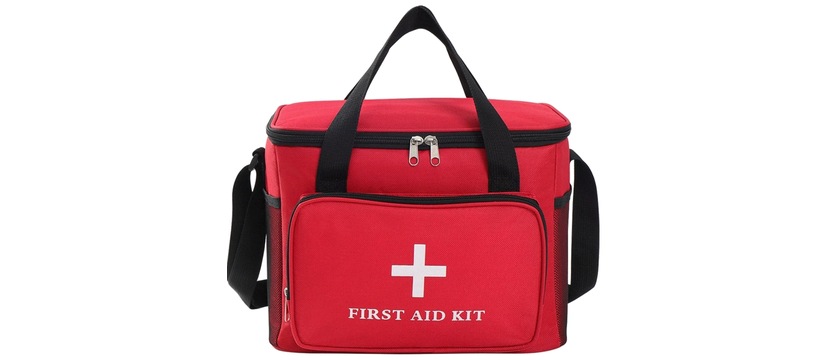
A first aid kit is quoted as a single item and bought as two products: a case and a contents list. The case decides how the kit survives a vehicle boot, a clinic shelf or a warehouse pallet, and it is often the larger share of the unit cost. The contents decide whether the kit does its job and whether it can be sold where the buyer intends to sell it.
Buyers tend to negotiate the contents because the contents are itemised, and to settle the case in a line of an email. That is the wrong order. The case constrains the list, not the other way round, and a case change late in a project reopens the packing method, the labels, the carton dimensions and the count.
What follows is about writing a list a factory can build without three rounds of questions, and about the parts of a list that only become visible when a kit crosses a border or fails a count.
The case is often the larger cost, and the list decides it
Three case formats are in common supply: a soft nylon bag, an EVA moulded pouch and a hard ABS case. They are not interchangeable containers for the same contents.
A moulded pouch gives every component a fixed position. That is a benefit at the point of use, because a glance tells the user what is missing, and a constraint at the specification stage, because the position is cut into the mould. Change a component for a different size and the recess may no longer hold it. The list has to be settled before the mould is committed.
A soft bag tolerates change. It also compresses: contents are pressed together in transit, pouches chafe, and a rigid item can damage a foil wrapper beside it. A list built for a bag needs to say how components are separated, not only what they are.
A hard case protects rigid items and stacks predictably, and it adds volume and weight to every carton. That cost appears in freight rather than in the unit price, which is why it is easy to miss in a comparison of quotations.
The practical consequence is that the case should be chosen first, against how the kit will be stored and carried, and the content list then written to fit it.
Five fields per line
A content list that leaves a factory guessing will be built to the factory's reading of it, and the first sample will be the first time the buyer sees that reading.
Five fields per line remove most of the ambiguity: the component, its size or type, the quantity, how that component is packed, and what is printed on it.
Component names are where lists fail first. "Scissors" describes a family, not an item: the tip shape, the material and the intended use all change what is supplied. "Gloves" without a material and a size is a guess. "Bandage" without a type and a width is a guess. The list does not need to be long; it needs to be specific enough that two people reading it would order the same thing.
Packaging per component is the second field buyers omit. A sterile dressing is not the same line item as a non-sterile one, because the sterile version arrives in its own wrapper with its own batch and expiry. Tape supplied loose and tape supplied in a dispenser are different components at the packing bench.
Marking is the third. If a component pouch is printed, the print has to be specified: the component name, the language, and whether a batch field appears. This is also the point at which personal-care and plastic items enter the list. Tweezers, kidney basins, trays and biohazard bags come from a different production line from the dressings, so their specification has to be settled at the same time rather than added after the kit is approved; the range is described under medical plastic products.
Standard-driven kits and own-list kits
There are two ways a content list arrives at a factory, and they carry different responsibilities.
In a standard-driven kit, the customer names a national standard and supplies the list of requirements the kit must meet. The factory builds to that transcription. It does not interpret the standard, decide which edition applies, or certify the kit against it. Those are the buyer's decisions, and where a kit is sold as meeting a standard, the statement is the seller's to make and to support. A supplier can confirm what was packed; it cannot confirm that the packing satisfies a document it was not asked to assess.
In an own-list kit, the contents are a commercial decision: what the brand wants the kit to contain, at what level of completeness, for which customer. This is the more common route for private label ranges, and it puts the whole of the specification on the buyer.
Many kits are a mixture. A standard-driven kit gains a foil blanket, a torch or a warning triangle because the market expects them. Additions like these are usually harmless to the kit's purpose and can still create a problem: a component added after the case was chosen may not fit the moulded recess, and a component added after the carton was specified may change the packed weight enough to alter the carton count.
The working rule is that additions are cheapest before the case and the carton are fixed, and expensive afterwards.
Case formats and what each asks of the list
The table sets out the three formats and the questions each one puts back to the buyer.
| Case format | What it suits | What the content list must then state |
|---|---|---|
| Soft nylon bag | Kits that are folded, carried and stowed, with components individually wrapped | How components are grouped inside, whether inner pouches are labelled, and how the bag is closed and marked |
| EVA moulded pouch | Kits where each component has a fixed place and the layout must be read at a glance | The position of each component, and what happens when a component is substituted for a different size |
| Hard ABS case | Kits that are stacked, transported and expected to protect rigid items | The internal dividers, the closure, whether contents are listed on an inner label, and the packed carton count |
Two points follow from the table. The first is that the case and the list are one specification, not two. A list approved against a bag and then built into a moulded pouch has not been approved at all, because the packing method that the sample demonstrated no longer exists.
The second is that the case carries its own marking obligations. A kit that lists its contents on the outside of the case has told the user what to expect; a kit that lists them on an inner label has told the user only after opening. Neither is wrong, but the choice should be made deliberately, because it affects what is printed, in which language, and whether the print survives handling.
Reconciliation: count, weight, one bag opened per batch
A kit is not verified by looking at it. It is verified by reconciling it.
Two checks run together. Counting confirms the number of components against the list. Weighing confirms that the components in the kit are the ones intended, because a light item missing and a heavy item missing move the scale differently, and a count alone cannot tell a full kit from a kit with one component swapped for another of the same count.
Alongside those, a sample is opened per batch and checked against the list line by line. The sample is where a substitution shows up, and where the packing of an individual component is confirmed as the buyer specified it.
Traceability runs through the same records. Sterile components carry their own batch number and expiry, because they were sterilised as components and their dates belong to them, not to the kit. The assembly batch is carried on the carton, which is what ties a delivered box back to the reconciliation for the batch it came from.
This is the step that decides whether a hospital contract survives. A consignment with one swab short is not a small error at the receiving dock: the whole consignment becomes suspect, the count that was signed at goods-in is questioned, and the buyer's own audit trail is exposed at the same time. The cost of the missing swab is trivial; the cost of the quarantine is not.
What changes when a kit crosses a border
A kit that is compliant at the factory gate is not automatically compliant at the destination, and the differences concentrate in the parts of the list that carry text.
Language is the first. Component pouches, the case label and the content list itself may each need to be in the destination language, and a kit assembled for one market cannot be relabelled for another without reopening the packing.
Symbols are the second. Where a component is marked with a symbol rather than words, the symbol has to be one the destination recognises, and the same applies to the sterile barrier markings on individually wrapped components.
Expiry is the third. Sterile components carry their own dates, and the kit's usable life is therefore set by the earliest of them. A list that mixes components with different dates produces a kit whose shelf life is decided by its shortest-dated line, which is a specification decision made at the list stage rather than at the packing bench.
The fourth is the identity of the party responsible for the kit in that market. Importers and distributors often carry obligations that the factory does not, and a kit assembled from several components raises the question of who is treated as its manufacturer. That question belongs to the buyer's regulatory consultant, not to the supplier's sales team.
What to confirm before ordering
- The case format, chosen against storage and transport rather than against the unit price of the contents.
- Whether the list is standard-driven, own-list or a mixture, and who is responsible for each part.
- The edition and title of any standard the customer names, quoted in the purchase documents.
- Every line written with component, size or type, quantity, packaging and marking.
- Which components are sterile, and therefore carry their own batch and expiry.
- How components are separated inside the case, particularly where rigid and foil-wrapped items share space.
- Whether the content list is printed on the case, on an inner label, or supplied as a separate card.
- The language of every printed surface, agreed per market rather than per order.
- The reconciliation method, including whether a sample is opened per batch and what happens to it.
- How the assembly batch is marked on the carton, and how it links to component batches.
- Whether personal-care and plastic items are included, and whether they are specified to the same level as the dressings; see dressing kits for the component side.
- The artwork route for private label, and who signs off the printed proof.
Can you build a kit to our list rather than to a standard?
Yes. Rich Medical builds content lists either to a customer's own list or to a national standard the customer names. In the first case the list is the specification, and the more precisely each line is written, the closer the first sample will be to the intent. In the second, the customer supplies the requirements and the factory packs to them; the interpretation of the standard, and any claim that a kit meets it, remain with the seller.
How are sterile components inside a kit labelled?
Each sterile component keeps its own wrapper, batch number and expiry, because it was sterilised as a component rather than as a finished kit. The kit's carton carries the assembly batch. A buyer should confirm that the component dates are visible after packing, since a component whose date is hidden inside a sealed inner pouch cannot be checked at goods-in without destroying the kit.
Is the case packaging or part of the product?
It depends on the market and on how the kit is presented, and the answer changes what has to be printed on it. A soft bag that is discarded after opening sits differently from a hard case intended to be refilled and kept. The buyer's regulatory consultant settles the question; the practical step for the buyer is to decide, before artwork, whether the case is expected to survive the first use.
The kits described here are listed under first aid kits, and the case formats, component options and packing data are set out in the 2026 first aid kits catalogue. Lists that need a second reading before they go to a factory can be sent through contact.
Buying this product?
Send your specification and quantity — we quote from the factory floor, not from a trading desk.